

Nollywood, the Nigerian film industry, has experienced tremendous growth and success in recent years, gaining popularity not only in Africa but also globally. However, despite its success, the industry still faces significant challenges, particularly in the area of film distribution. A few dominant players who prioritize profit over the interests of filmmakers and audiences largely control the distribution of Nollywood films in Nigeria. This has led to a situation where many Nollywood films struggle to find a wide audience, and where filmmakers struggle to make a living from their work. In Africa and beyond, Nollywood movies are famous and speak volumes about Nigeria. Despite the fame, the movie industry is faced with serious technical, language and acting challenges. Quality questions bothering on storylines and directorial vision or concept are some of the other most bugging experiences affecting the image of Nollywood (Shimsenge and Agav 2014). Such deficiencies ordinarily should not dent the fame of Nigeria’s movie industry that is widely considered as the second largest in the world (behind India’s Bollywood) (Ovoke, 2015).
According to a report by the International Journal of Humanities and Social Science Research (Bamidele, 2019), the Nigerian film industry is the second-largest film industry in the world, producing over 2,500 films annually.
In a 2018 article by The Guardian titled, “Nollywood: Nigeria’s film industry unmoved by recession” written by Emmanuel Akinwotu, it was reported that the Nigerian government had taken steps to address some of these challenges by launching a $1 million venture capital fund for the creative industry. The fund was aimed at providing financial support to filmmakers and other creative entrepreneurs in Nigeria. However, the article also noted that more needed to be done to address the issue of film distribution.
The dominance of a few distributors in the Nigerian film industry has been a major challenge for filmmakers. These distributors control the majority of the cinemas in the country and have significant influence over the distribution of films. As a result, many filmmakers struggle to get their films shown in cinemas, and those that do often receive unfavorable terms. This has led to a situation where many Nollywood films are released straight to DVD or online platforms, limiting their potential audience and revenue.
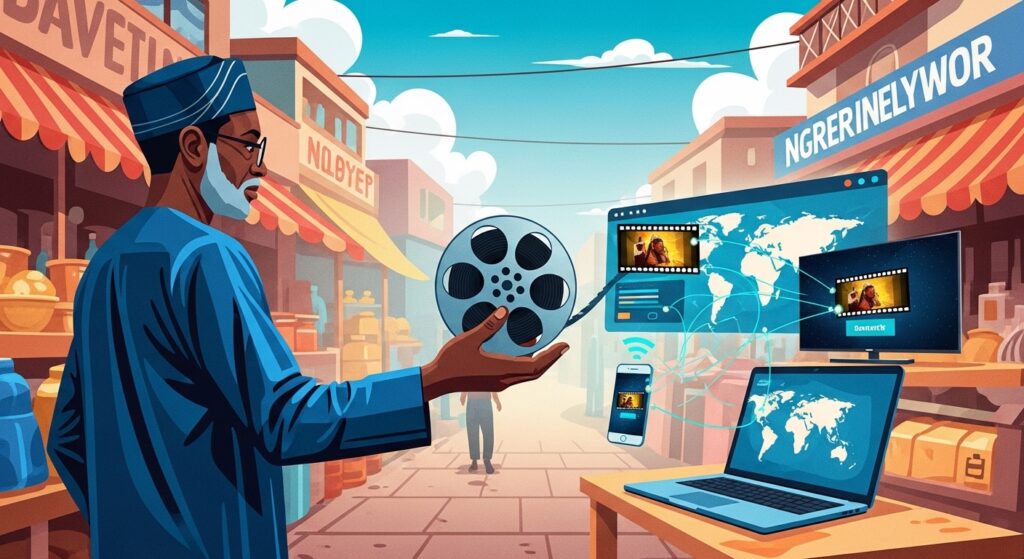
In a 2020 article by Variety, it was reported that the COVID-19 pandemic had further highlighted the need for a more diverse and inclusive film industry in Nigeria. The article noted that the pandemic had led to the closure of cinemas, which had a significant impact on the industry. However, it also highlighted the potential of digital distribution platforms to reach a wider audience. The article noted that the pandemic had accelerated the shift towards digital distribution, and that this could be an opportunity for Nigerian filmmakers to reach a global audience.


Comments are closed